Malawi Unveils First National Ecosystem Assessment, Warning of a Biodiversity System Under Strain
- News
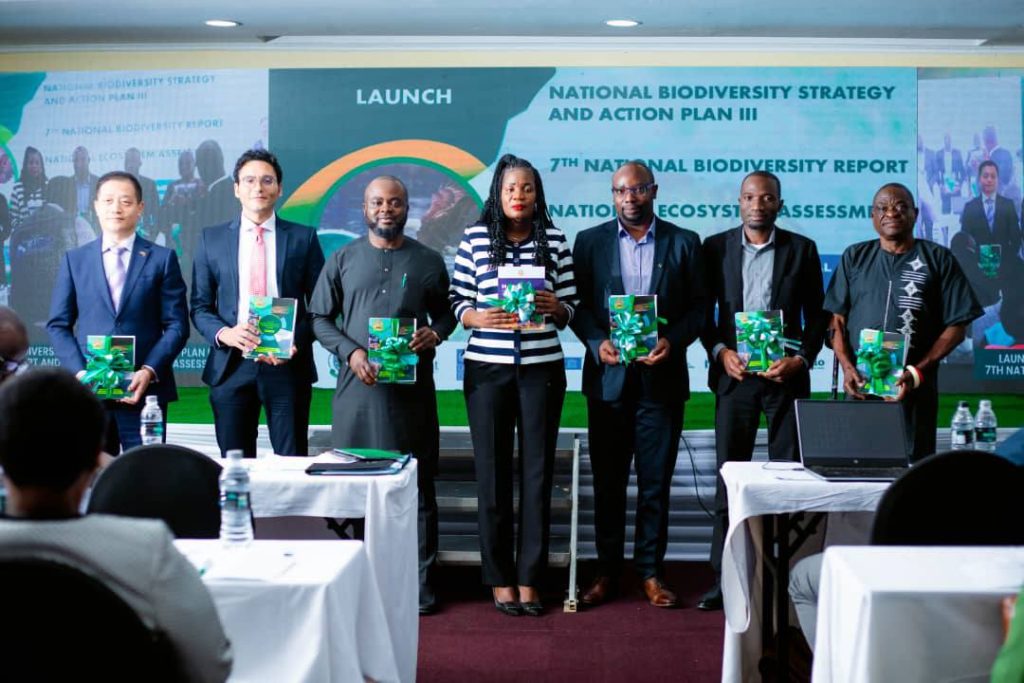
Lilongwe, 27 May 2026 – Malawi has launched its first national ecosystem assessment, a sweeping evidence review that finds the country’s forests, lakes and wetlands are degrading rapidly even as millions of Malawians depend on them for food, income and water.
The assessment was released alongside two other major documents: Malawi’s Third National Biodiversity Strategy and Action Plan (2025–2035) and its Seventh National Report to the Convention on Biological Diversity. Officials and partners described the coordinated launch as a milestone in aligning the country’s environmental policies with the Kunming-Montreal Global Biodiversity Framework, the global agreement for urgent action to halt and reverse biodiversity loss.
The launch event was followed by a multi-stakeholder dialogue aimed at translating the assessment’s findings into policy, planning and on-the-ground management. UNEP-WCMC provided technical support to the process, and in a statement at the launch thanked the authors, reviewers, Indigenous Peoples, local knowledge holders, policymakers and stakeholders involved, recognizing their essential contributions to the outcome.
A country running on natural capital
The scale of Malawi’s dependence on nature is central to why the assessment matters. An estimated 85% of the population relies directly on biodiversity and nature’s contributions to people for their livelihoods. Agriculture alone employs more than 76% of the workforce and accounts for over 22% of GDP. Yet until now, data on the state of the country’s ecosystems has been scattered across government ministries, with no single evidence base to guide decisions or track change over time.
The national ecosystem assessment is intended to strengthen the bridge between science and policy. Covering over more than a decade of scientific information combined with Indigenous and Local Knowledge (ILK), the assessment aims to become Malawi’s official reference point for sectoral planning, environmental impact assessments and international reporting obligations under the Convention on Biological Diversity, the UN Framework Convention on Climate Change and the UN Convention to Combat Desertification.
The assessment was implemented by the Lilongwe University of Agriculture and Natural Resources (LUANAR), in collaboration with the Environmental Affairs Department, Ministry of Natural Resources, with technical support from the NEA Initiative at UNEP-WCMC and partners from the Biodiversity and Ecosystem Services Network (BES-Net) consortium – UNESCO and UNDP. The assessment was part of the 2nd phase of BES-Net, with financial support from German Federal Ministry for the Environment, Climate Action, Nature Conservation and Nuclear Safety (BMUKN) through the International Climate Initiative (IKI).
Fisheries in decline, but community management shows promise
Malawi’s lakes and rivers, which cover roughly a fifth of the country’s surface area, are among the most biologically rich freshwater systems in the world. Lake Malawi alone is home to more than 1,000 fish species — 99% of them endemic cichlids — representing around 4% of all fish species on Earth. Fisheries supply 60–70% of the animal protein Malawians eat and support the livelihoods of more than 1.6 million people.
That richness is under sustained pressure. Catches of Chambo, a fish long considered a national staple, have collapsed by more than 70% in the last 50 years, driven by overfishing, sedimentation and pollution from deforested catchments upstream. Several shallow lakes — Chilwa, Malombe, Chiuta and Kazuni — are increasingly prone to drying out entirely as rainfall patterns shift.
The assessment does highlight a bright spot. Community-run sanctuaries, overseen by Beach Village Committees have used an ecosystem-based approach to fisheries management to produce a 24% rise in observed fish species across 56 sites between 2016 and 2019. Traditional practices such as seasonal fishing bans and taboos tied to sacred sites have protected breeding grounds for generations, the report notes — but these customs are fading as younger generations move to cities and formal institutions sideline ILK in decision-making.
Forests at a “tipping point”
On land, the picture is similarly stark. Malawi’s forest cover has nearly halved since 1975, falling from 47% to just 24% of the country by 2020 — one of the fastest deforestation rates in Southern Africa. Almost 60% of Malawi’s land is now classified as severely degraded, and the overall value of ecosystem services fell by nearly 6% between 2001 and 2022.
Researchers point to agricultural expansion as the leading cause, followed by logging, hunting and unsustainable harvesting of natural resources. But the assessment also documents a striking pattern: at sites where Indigenous Peoples, and local communities retain real authority over land management — such as Khulubvi Sacred Forest, Mbande Hill and Hora Mountain — conservation outcomes consistently outperform those in formally protected reserves managed by State institutions. Despite this evidence, a review of 28 national policy instruments found just one, the National Environmental Policy of 2004, explicitly recognises the role of Indigenous knowledge in conservation.
Wetlands worth hundreds of millions remain without a policy
Malawi’s more than 18 major wetlands, including the Ramsar-listed Lake Chilwa and Elephant Marsh, generate an estimated $330 million a year in economic value across just four sites, while underpinning food and water security for millions of rural Malawians. They also store carbon and buffer surrounding communities against floods and drought.
However, wetlands are managed piecemeal, folded into agriculture, irrigation and energy policy rather than treated as ecosystems in their own right — a gap the assessment identifies as the single biggest obstacle to coordinated protection. Urban growth in cities such as Lilongwe, Blantyre and Mzuzu, along with commercial agriculture and upstream water abstraction, is accelerating wetland degradation and losses. The assessment concludes that a dedicated policy for wetlands could help reverse these trends.
A warning about interconnection
Perhaps the assessment’s central message is that Malawi’s forests, freshwater systems and wetlands cannot be managed in isolation from one another. Deforestation in the Linthipe River catchment, for instance, is estimated to deliver 30–40% of all sediment entering Lake Malawi — degrading fish habitat, clogging hydropower infrastructure that generates more than 95% of the country’s electricity, and weakening wetlands’ ability to buffer floods downstream. A single case of upstream deforestation, in other words, ripples through fisheries, energy supply and flood resilience alike.
Modelling included in the assessment suggests that the deciding factor in Malawi’s environmental trajectory will not be any single policy, but the broader quality of governance and socio-economic conditions. Researchers modelled scenarios ranging from “Mkaka ndi Uchi” (Abundance) — in which strong governance drives ecosystem recovery — to “Nyekhwe” (Hardship), a self-reinforcing cycle of poverty and degradation.
What comes next
The assessment’s authors call for the National Ecosystem Assessment to be formally adopted as Malawi’s reference evidence base for planning and reporting, alongside legal recognition of ILK and community-led conservation. Other recommendations include sustained investment in long-term ecosystem monitoring, the urgent drafting of a National Wetlands Policy, stronger enforcement support for community natural resource committees, greater representation of women in resource governance, and cross-sectoral management of priority river catchments as strategic national infrastructure.
For now, officials are framing the launch itself as a turning point — a rare moment when scientific data, ILK and government policy converged in a single evidence base. Whether that evidence translates into slower deforestation, recovering fish stocks and a national wetlands policy will be the real test in the years ahead.
Download the assessment reports: Summary for Policymakers | Technical Report