Botswana launches its first national ecosystem assessment, providing roadmap for nature, people and sustainable development
- News
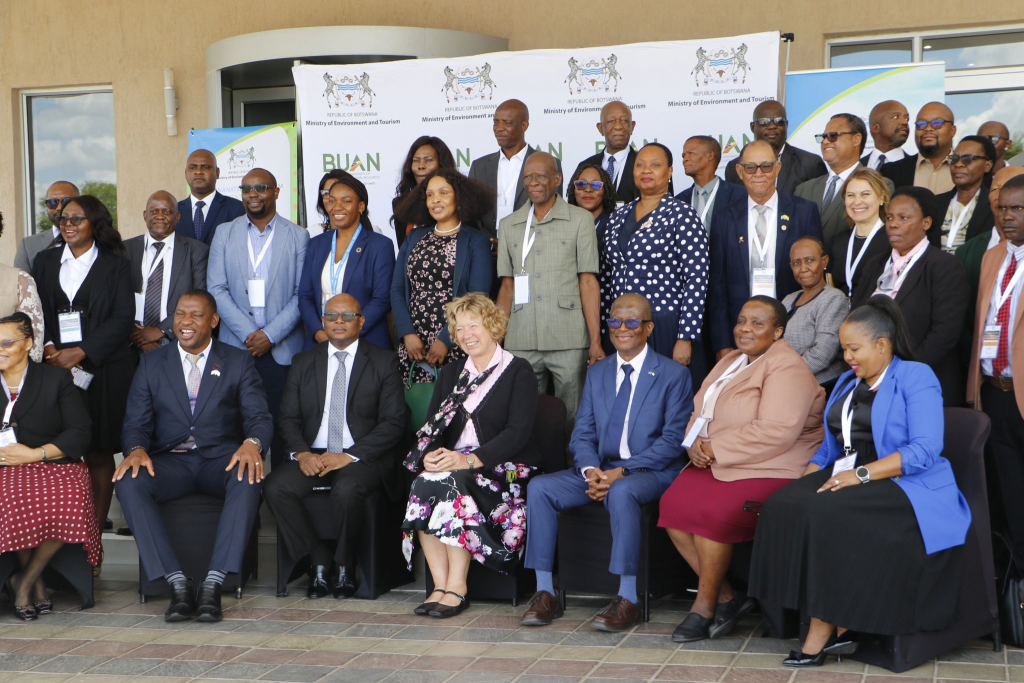
Botswana has officially launched the Technical Report and Summary for Policymakers of its first national ecosystem assessment, marking an important milestone in the country’s efforts to strengthen evidence-based decision-making for biodiversity conservation and sustainable development.
The assessment reports were launched on 24 March 2026 during a high-level event attended by government representatives, technical partners, academia, Indigenous and local communities, traditional knowledge holders, the private sector and development partners. During the event, the Botswana University of Agriculture and Natural Resources (BUAN), which coordinated the assessment, formally handed over the reports to the Ministry of Environment and Tourism, signalling a new phase focused on the dissemination and use of the assessment’s findings.
Developed through a collaborative, country-led process, the assessment provides Botswana’s first comprehensive expert evaluation of the condition, trends and future outlook of its ecosystems. By combining scientific evidence, spatial analysis, scenario modelling, and traditional knowledge, it offers a robust evidence base to support national development planning while contributing to global commitments, including Botswana Vision 2036, the Kunming-Montreal Global Biodiversity Framework and the Sustainable Development Goals.
The assessment examines six priority ecosystems: aquatic and wetland ecosystems, forests and woodlands, grasslands and shrublands, agroecosystems, desert ecosystems and hill ecosystems. Together, these landscapes underpin Botswana’s economy, supporting water security, food production, tourism, climate regulation, cultural identity and rural livelihoods.
The findings show that these ecosystems are increasingly under pressure from climate change, prolonged droughts, changing rainfall patterns, land-use change, invasive species, pollution, overgrazing and unsustainable resource use. Without stronger conservation and restoration efforts, ecosystem degradation could undermine biodiversity, economic development and community resilience.
Among its findings, the assessment reports long-term declines in wetland extent and forest cover, increasing pressures on rangelands and agricultural landscapes, and growing risks to water security and ecosystem services. At the same time, it highlights significant opportunities to reverse these trends through ecosystem restoration, improved land-use planning, community-based natural resource management, climate-smart agriculture and stronger biodiversity governance.
A distinctive feature of the Botswana National Ecosystem Assessment is its weaving of traditional knowledge alongside scientific evidence. Through extensive engagement with Indigenous Peoples and local communities, the assessment recognises the important role of traditional governance systems, cultural practices and community knowledge in conserving ecosystems and supporting sustainable livelihoods.
The assessment also identifies opportunities to strengthen Botswana’s green and blue economy through sustainable tourism, ecosystem restoration, biodiversity finance, carbon markets, Payments for Ecosystem Services and natural capital accounting. It emphasises that recognising the economic value of nature will be critical for integrating ecosystem considerations into national planning and investment decisions.
Using scenario modelling, the assessment further demonstrates how different policy and development choices could shape Botswana’s environmental future. While business-as-usual pathways are projected to result in continued ecosystem degradation, sustainability-focused approaches centred on restoration, inclusive governance and nature-based solutions offer pathways to more resilient ecosystems and communities.
As Botswana moves from assessment to policy action and decision-making, the findings provide an important resource for government, researchers, civil society, local communities, development partners and the private sector. The assessment highlights that protecting ecosystems is not only essential for conserving biodiversity but also for safeguarding livelihoods, strengthening climate resilience and supporting long-term sustainable development.
This article draws on findings from the Botswana National Ecosystem Assessment: Summary for Policymakers and Technical Report, developed by the Government of Botswana through the Ministry of Environment and Tourism and the Department of Environmental Protection, in collaboration with the Botswana University of Agriculture and Natural Resources, with support from the National Ecosystem Assessment Initiative at UNEP-WCMC, in collaboration with Biodiversity and Ecosystem Services Network (BES-Net).