By Alice Kammwamba and Lilian Chimphepo
Nestled along the boundary of Vwaza Marsh Wildlife Reserve, the community of Zolokere lives adjacent to the protected area, which was established in 1977 to conserve biodiversity. While the Reserve plays an important role in safeguarding ecosystems and wildlife, community members note that current management practices do not always fully reflect the needs and rights of the people who depend on it and help in the stewardship of the ecosystem.
An assessment on the application of a Human Rights-Based Approach (HRBA) in biodiversity conservation in Malawi was conducted under the Malawi National Ecosystem Assessment (NEA) in August 2025. This assessment highlighted Zolokere village as a useful case for understanding how conservation can be strengthened when it is grounded in human rights. Among other things, this approach helps to reduce inequalities, supports community well-being, and reinforces long-term sustainability.
What is Human Rights based Approach (HRBA)?
HRBA is a transformative framework that integrates human rights principles into development and conservation efforts. It ensures that policies and actions respect, protect and promote human rights such as dignity, equality, participation, accountability and access to justice. HRBA shifts the focus from charity or compliance to empowerment, recognizing communities as rights-holders and various institutions as duty-bearers. In biodiversity governance, HRBA means conservation must protect both ecosystems and the people who depend on them.
Conservation and Cultural Rights
For generations, the Zolokere community has sustained a close relationship with surrounding ecosystems, guided by their robust Indigenous and local knowledge and cultural practices. Cultural norms and taboos have long helped regulate harvesting, support sustainable use of natural resources, and reinforce communal stewardship. Community members report that, over time, customary systems have sometimes been difficult to align with the Vwaza Marsh Wildlife Reserve regulations and operational requirements, emphasizing the need to deepen consultation and cultural considerations. This has highlighted the value of strengthening communication, trust, and shared problem-solving between the Reserve authorities and the communities that have safeguarded these landscapes for generations, including before the Reserve’s establishment.
One of the most pressing concerns raised by the community relates to access to the ancestral graveyard (for their chiefs) located within Reserve. The chiefs’ graveyard is a sacred site for the Zolokere community, serving as a cornerstone for identity, lineage, spirituality, and cultural continuity. For Zolokere community members, visiting this graveyard is not only a cultural right but a fundamental expression of belonging.
Community members reported that Reserve authorities have not yet been able to accommodate requests to bury recent Zolokere chiefs in the ancestral graveyard. However, they are still allowed to clean the sacred site and conduct annual cultural ceremonies. This suggests that while certain forms of cultural access remain in place, restrictions on chief burials are experienced by the community as a significant disruption to cultural continuity and ancestral connection. This prompts the need for continued dialogue to explore options that respect cultural continuity while meeting conservation and management requirements.
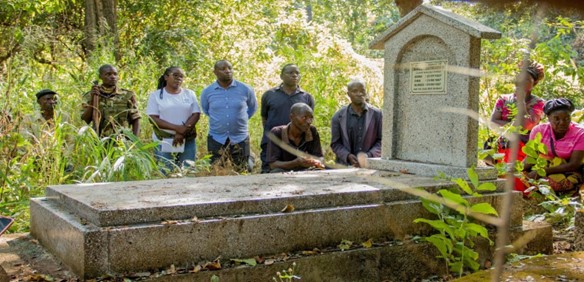
Zolokere Burial Site in the protected area. Photo taken by Hezekiah Namonde.
“We cannot bury our chiefs where our ancestors rest. It feels like we have been separated from our own culture and history,” one community member shared.
This concern about cultural access emerged as one of the most significant findings in the HRBA assessment, illustrating how conservation management processes can have unintended cultural and spiritual impacts. Addressing such issues through dialogue and culturally informed planning aligns with HRBA principles of dignity, equality, and cultural identity that Malawi has committed to uphold.
Participation and Partnership
Meaningful community participation in environmental decision-making is another area where stakeholders identified room for improvement. Community members indicated that decisions related to Reserve boundaries, regulations, and resource access are often made “using a top-down approach” with information flowing largely in one direction. While consultations do occur, participants suggested they could be more participatory and provide better opportunities for communities to influence outcomes.
The principle of Free, Prior and Informed Consent (FPIC), central to global human rights and Indigenous rights frameworks, is not yet systematically embedded in biodiversity governance processes in this context. FPIC provides a framework to help ensure communities have a genuine and uncoerced choice in decisions about projects or policies that affect their lands, resources, and cultural heritage.
What is FPIC?
FPIC is a global standard that guarantees communities the right to decide on projects or policies affecting their lands, resources, and cultural heritage.
- Free: Consent is given voluntarily, without coercion or pressure.
- Prior: Communities are consulted before decisions or actions occur.
- Informed: Full, transparent information is provided in a culturally appropriate way.
- Consent: Communities have the right to approve or reject proposals, and their decision must be respected.
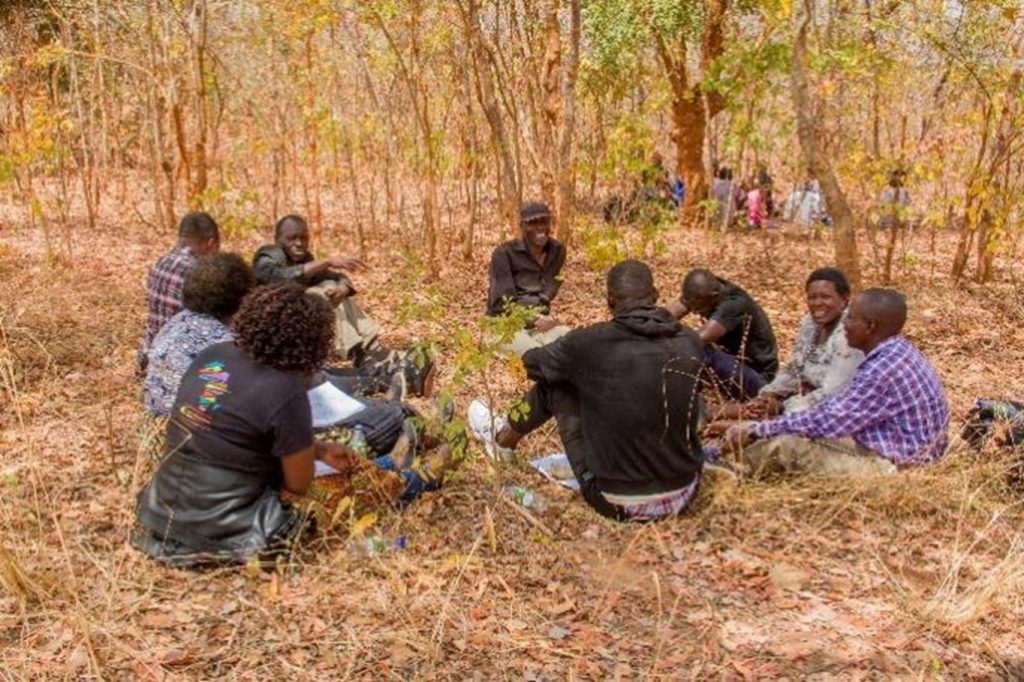
Focus group discussion on HRBA at Zolokere. Photo taken by Hezekiah Namonde.
Human-Wildlife Conflicts
Human-wildlife conflicts are a major concern in Zolokere. Crop destruction by elephants and other wildlife can push families into food insecurity and even result in loss of life. Community members reported that responses to incidents by the authorities can be delayed, and that mitigation and compensation arrangements remain limited.
Accountability mechanisms and communication channels were also identified as areas that could be strengthened. Community members noted that while they are expected to comply with Reserve regulations, it is not always clear how concerns are reported, followed up, and resolved. More consistent communication and accessible grievance mechanisms could help ensure that issues are addressed in a timely and transparent manner.
Resilience and Deep Ecological Knowledge in Zolokere
Zolokere reflects not only challenges, but it is also a story of resilience and deep ecological knowledge. Community knowledge systems continue to regulate natural resources through unwritten rules, seasonal restrictions, and collective monitoring. Women play critical roles in firewood management, water collection, human health, and disease prevention in livestock and crops, and. Youth groups participate in patrols and awareness campaigns. Traditional leaders maintain cultural governance structures that promote harmony between people and nature. However, these practices are not always fully reflected within formal park management plans. Limited recognition and inclusion of Indigenous and local knowledge into biodiversity governance means that opportunities for co-management, cultural conservation, and sustainable livelihoods may be missed.
A Way Forward
During the assessment process, Zolokere Community members expressed a strong willingness to collaborate with Reserve authorities, provided relationships are strengthened through mutual respect and regular engagement. They proposed clear pathways for joint decision-making, recognition of customary governance practices, shared monitoring of wildlife challenges, and transparent benefit-sharing mechanisms. Formal recognition of cultural rights, including secure access to the ancestral graveyard, was identified as a high priority.
At national level, these findings offer valuable insights for Malawi’s ongoing update of its third National Biodiversity Strategy and Action Plan (NBSAP) III. Zolokere’s case suggests that biodiversity conservation is most sustainable when it also safeguards human dignity and cultural identity, and when it promotes participation and access to justice. HRBA is not an abstract principle; it is a practical tool that can help ensure conservation efforts uplift communities while protecting ecosystems.
The Zolokere experience suggests that conservation can move beyond applying rules to communities or viewing them mainly as resource users, and instead engage them as knowledge holders, rights-holders, biodiversity stewards, and partners. Strengthening HRBA principles, especially FPIC, accountability, transparency, and meaningful participation, offer a pathway for repairing relationships and building trust. Recognizing Indigenous and local knowledge is equally essential, not as a symbolic gesture but as a foundation for sustainable and inclusive natural resources governance.
Ultimately, Zolokere’s story reminds us that conservation is not a choice between people and nature; it is about recognizing that the two are inseparable. When conservation initiatives do not fully account for community rights and realities, both social outcomes and environmental goals can be challenging to achieve. When conservation embraces communities as partners rooted in rights and cultural heritage, it can become transformative. Malawi now has an opportunity to build a new path where places like Zolokere in Vwaza Wildlife Reserve are not the exception, but a model for rights-based, inclusive biodiversity governance.
Lilian Chimphepo is the Co-chair of the Malawi National Ecosystem Assessment and Chief Environmental Officer, Environmental Affairs Department, Ministry of Natural Resources, Government of Malawi.
Alice Kammwamba is the Project Manager and Indigenous and Local Knowledge Coordinator for the Malawi National Ecosystem Assessment.
The Case Study “Documenting Human Rights-Based Approaches in the Malawi National Ecosystem Assessment” was financially supported by SwedBio at Stockholm Resilience Centre.
Financial support for the Malawi National Ecosystem Assessment is being provided by the International Climate Initiative (IKI) of the Federal Government of Germany. Within the Federal Government, the IKI is anchored in the Federal Ministry for the Environment, Climate Action, Nature Conservation and Nuclear Safety (BMUKN). Selected individual projects are also the responsibility of the Federal Foreign Office (AA).